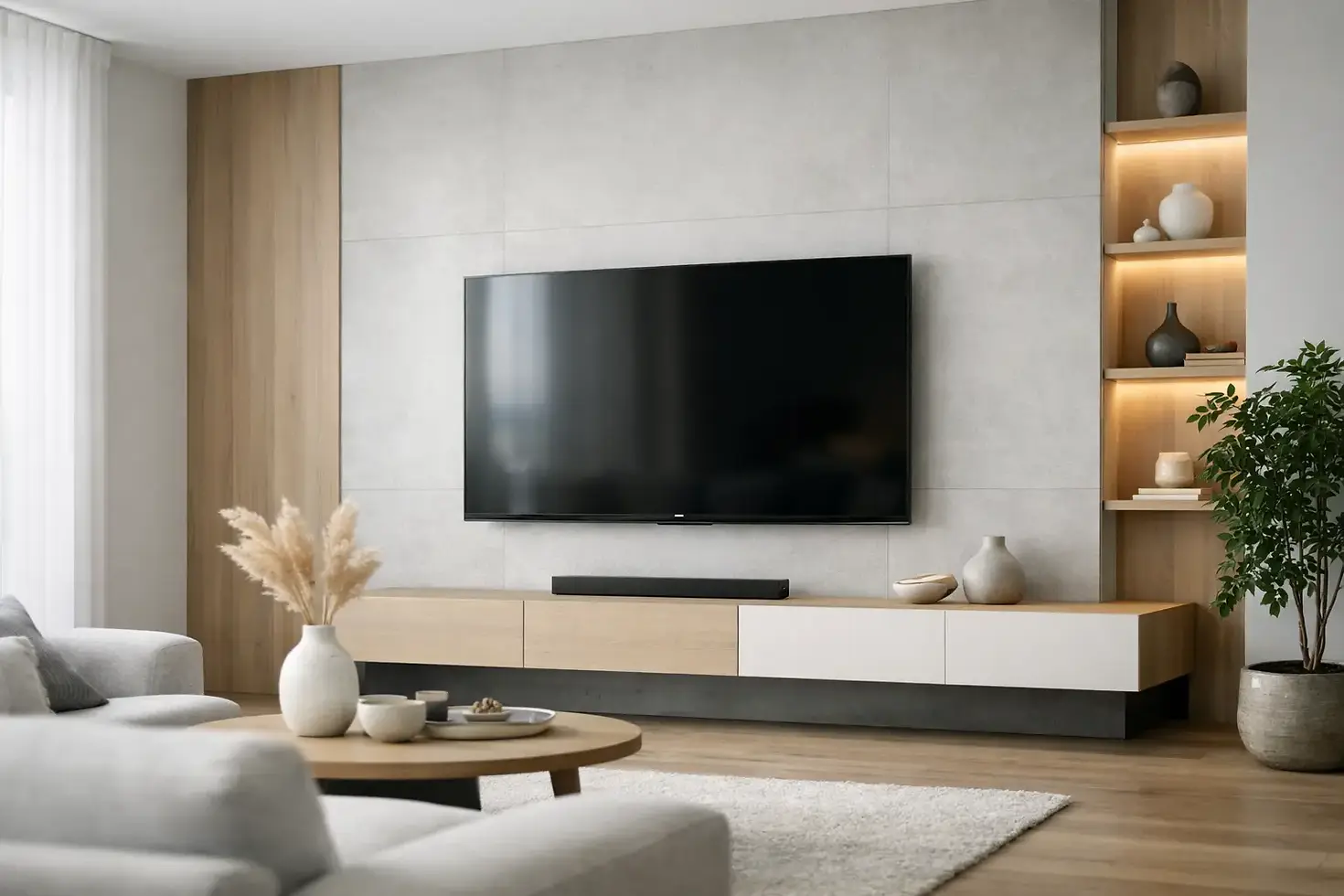
TV Wall Design Trends for a Cleaner Living Room
- Brandon Bird
- Aug 21
- 6 min read
A TV wall should make the room feel calmer when the screen is off, not leave you staring at a tangle of cords, crowded shelves, and a black rectangle that dominates the space. The best tv wall design trends balance a polished look with the everyday needs of a real home: easy viewing, accessible outlets, room for media equipment, and finishes that still work years from now.
For Charlotte-area homeowners, a thoughtfully mounted TV can be one of the fastest ways to refresh a living room, bedroom, bonus room, or den without taking on a full renovation. The right design depends on your wall size, seating layout, storage needs, and the style of your home.
TV Wall Design Trends That Feel Useful, Not Fussy
The strongest trend is not a single color or material. It is intentional simplicity. Homeowners are moving away from oversized entertainment centers and exposed components in favor of walls that look built into the room.
A clean installation starts with placement. Mounting the TV at a comfortable height, centered on the seating area when possible, gives the room an immediate sense of order. From there, the wall can stay minimal or become a more defined focal point.
Warm wood slat panels
Vertical wood slats remain popular because they add texture without requiring a busy pattern. They work especially well behind a wall-mounted TV, where the natural grain softens the look of the screen and makes the wall feel more finished.
This approach fits modern, transitional, and even traditional homes when the wood tone is chosen carefully. Light oak and medium walnut tones tend to feel warm and current, while very dark finishes can make a smaller room feel heavier. A slat panel can cover the full wall, stop at the width of the console, or frame only the TV area.
Keep practicality in mind. If you use slats, plan cable paths and mounting support before the panels go up. Retrofitting wires after decorative materials are installed is possible, but it is rarely the cleanest or most affordable route.
Painted feature walls with depth
A feature wall is a lower-commitment option that still gives the TV a purposeful home. Deep green, charcoal, navy, muted clay, and warm greige are popular choices because they reduce the visual contrast of a black screen when it is turned off.
Paint is especially useful if you want a change without adding much thickness to the wall. It can also highlight trim details, such as picture-frame molding or simple board-and-batten panels. In a room with abundant natural light, a richer color can create welcome depth. In a darker room, a medium neutral may be the better choice.
Avoid choosing a color solely from a small paint chip. Look at it on the actual wall at different times of day, especially in rooms that receive strong afternoon sun.
Floating media cabinets
Floating cabinets are a practical favorite because they create visual space beneath the TV while offering concealed storage for game consoles, streaming devices, remotes, and cables. They work well in living rooms where a large, freestanding TV stand would feel bulky.
The cabinet does not need to be oversized. A piece that is wider than the TV often looks balanced, but its depth should suit the room. A shallow cabinet is usually enough for streaming equipment and helps preserve walking space in narrower family rooms.
For the cleanest result, plan for ventilation. Consoles and receivers generate heat, so closed storage should have airflow rather than becoming a hidden hot box for electronics.
Simple built-ins around the screen
Built-ins are becoming less formal and more flexible. Instead of heavy cabinetry covering an entire wall, many homeowners choose open shelving, lower cabinets, or a modest surround that gives the TV a custom appearance without making it the only feature in the room.
This option is ideal when storage is a priority. Books, family photos, baskets, and a few decorative pieces can make the wall feel personal. The trade-off is maintenance. Open shelves require regular editing and dusting to keep the arrangement from looking cluttered.
If you prefer a consistently clean look, lower cabinets with a simple painted or stained wall behind the TV may deliver more value than shelves filled with items you do not use.
Make Cable Management Part of the Design
No matter which style you choose, visible wires can undermine the finished look. Concealing power cords and low-voltage cables inside the wall is one of the most valuable details in a TV wall project.
A properly planned setup accounts for more than the TV power cord. You may need connections for a soundbar, cable box, gaming system, antenna, Ethernet, or future equipment. Thinking through those items before the TV is mounted helps prevent extra holes, extension cords, and last-minute compromises.
A recessed outlet behind the TV can help the screen sit closer to the wall. A second outlet or cable pass-through near the media cabinet keeps components organized below. For homeowners who rent or do not want to open drywall, surface cord covers can still provide a much neater result, though they are more visible than in-wall routing.
Electrical work should be handled safely and according to applicable requirements. Using an extension cord inside a wall is not a proper substitute for a correctly placed outlet.
The Frame TV Look Still Has a Place
Art-style TVs are popular in rooms where homeowners want the screen to disappear into the decor. When paired with a slim frame and artwork display, the TV can resemble a large framed print when it is not in use.
This design works best when the wall already supports a gallery-like look, such as a painted feature wall, picture molding, or a restrained arrangement of framed art. It can feel out of place on a highly rustic wall or next to a large, traditional entertainment center.
Be realistic about the result. An art TV can blend in beautifully, but it will not look identical to a canvas in every lighting condition. The benefit is less about fooling the eye and more about making the screen feel intentional between movie nights.
Add Lighting With Restraint
Lighting can give a TV wall depth and improve comfort during evening viewing. Soft LED backlighting behind the screen reduces the harsh contrast between a bright display and a dark wall. Accent lights in shelving or under a floating cabinet can add warmth without taking attention away from the picture.
The key is restraint. Color-changing lights can be fun in a game room, but a family living room often benefits more from warm white lighting on a dimmer. Avoid fixtures that create glare on the screen or shine directly toward the seating area.
If a new outlet, switch, or lighting connection is part of the project, it is smart to coordinate it with the mounting plan. Doing the work in the right order protects the wall finish and avoids duplicate visits.
Choose Proportions Before Materials
Before selecting slats, paint, tile, or trim, decide how the TV wall will function. The TV size should suit both the wall and the viewing distance. A screen that is too small can look lost on a wide wall, while one that is too large can make comfortable viewing difficult.
As a general design rule, leave visual breathing room around the screen. If you are adding a cabinet, shelves, or trim, measure the entire composition rather than treating the TV as a separate object. Painter's tape on the wall is a simple way to test the size and placement before making permanent changes.
Mounting height matters just as much. In most living rooms, the center of the screen should be near seated eye level, adjusted for the size of the TV and the viewing position. Mounting above a fireplace may be appropriate in some spaces, but it can place the screen higher than ideal and may expose electronics to heat. It depends on the fireplace design, mantel depth, and seating arrangement.
A Practical Plan for a Better TV Wall
The most successful TV walls usually come together in this order: decide where people sit, choose the screen size and mounting location, identify power and equipment needs, then select the finish around it. Starting with the decor can lead to a beautiful idea that does not leave room for cables, sound equipment, or comfortable viewing.
For a straightforward upgrade, a professionally mounted TV with concealed cables and a floating cabinet may be all the room needs. For a larger visual change, pair the installation with a painted feature wall, new trim, or wood slats. Bird Home Services can help Charlotte homeowners bring those practical details together, from secure TV mounting to the finishing touches that make the wall look complete.
Choose a design that supports how your household actually uses the room. A wall that looks clean, keeps equipment accessible, and makes movie night more comfortable will stay in style long after a passing trend fades.


Comments